
From law to legal English
Hi there — I’m Claudia, and this is SpeechLex. Today, I help legal professionals build the English their work needs. Here’s how I got here.
I chose law by flipping a coin. Flyer in one hand, coin in the other. Law came up. I never regretted it.
In my final year, a civil procedure course covered Italian and American law side by side. My classmates struggled and paid to have the documents translated. I found it easy, and genuinely enjoyed it. That’s when I knew: I wanted a career that put law and English together. I just didn’t know yet what that career actually looked like.
In pictures
My journey at a glance
-

Where it starts
Italian and Canadian
Born and raised in Italy, Canadian through my mum. English came with her: songs, musicals, bedtime stories. Legal English came much later, and I built it myself.
-

2012
A law degree
Graduation day in Genoa. I studied law to find a job. By the end, I knew I wanted a career where law and English work together.
-

2014
London
A scholarship took me to a firm of solicitors in London, and my Bar counted it towards my traineeship. Hearings, real cases, English every day.
-

2016
The Bar exam
Five minutes before my oral exam. I’d studied every night after work. I passed, then put the certificate in a drawer. It had to wait.
-
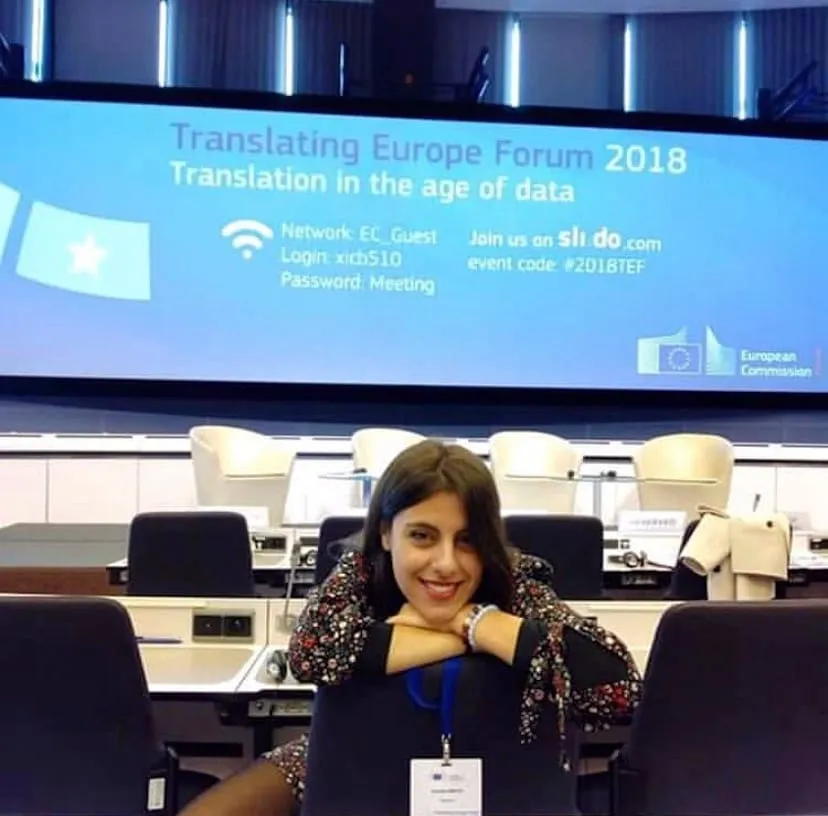
2018
Still building
My part-time job meant I couldn’t practise law yet. So I kept building my skills: I taught, I translated, and I went to every international event I could.
-

2020
An important step
A postgraduate specialisation in legal translation at the University of Genoa. It was 2020, so the lessons, the final exam and even the ceremony were online. Still building.
-

2023
The big step
The pandemic put my part-time job on hold. It showed me that my skills and my network were ready. So I put on the gown and started my own career.
-
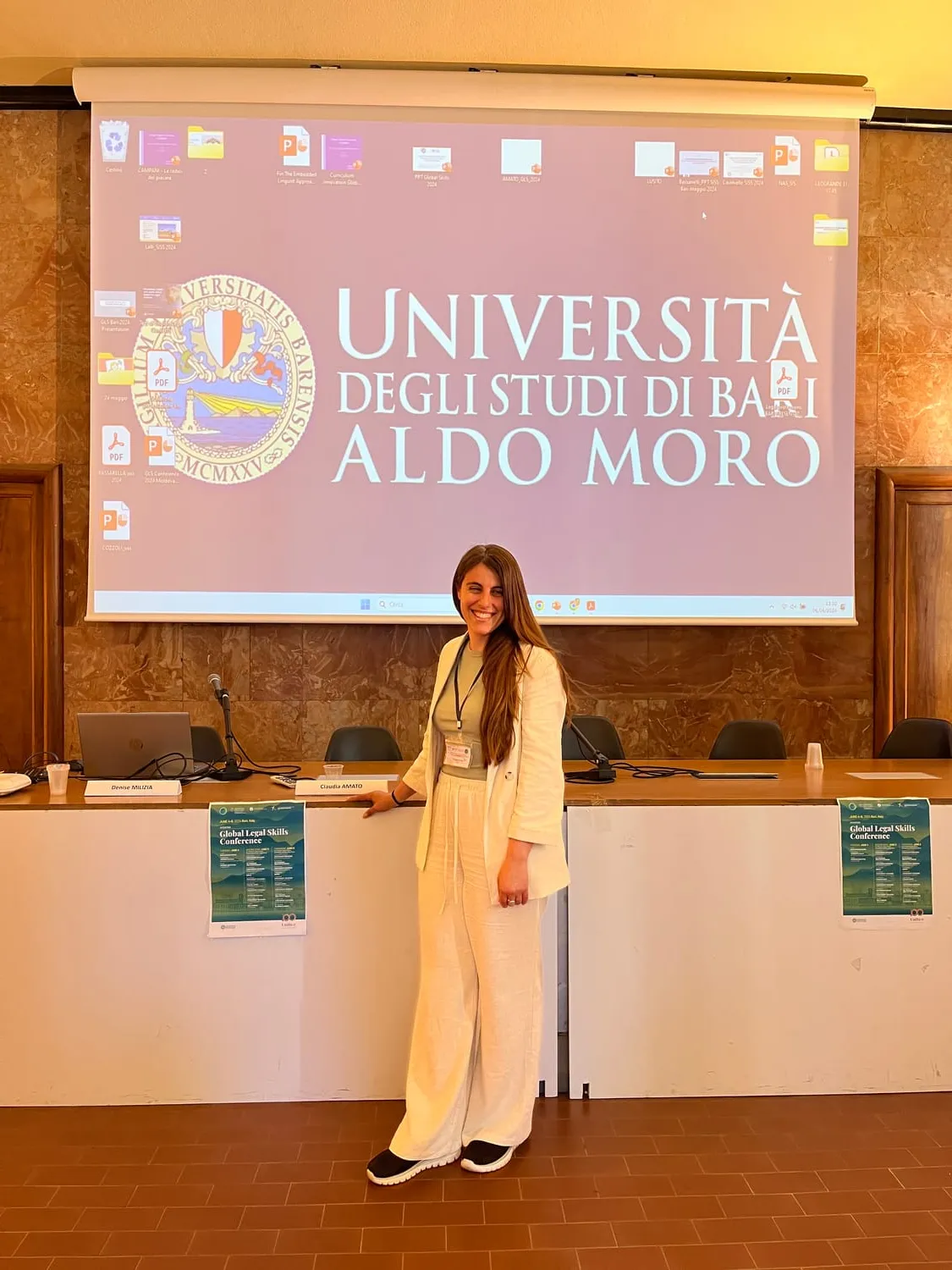
2024
A before and after
At the Global Legal Skills Conference in Bari, I presented my independent research. Between 2023 and 2024, I tested 400 Italian legal professionals on their legal English.
-
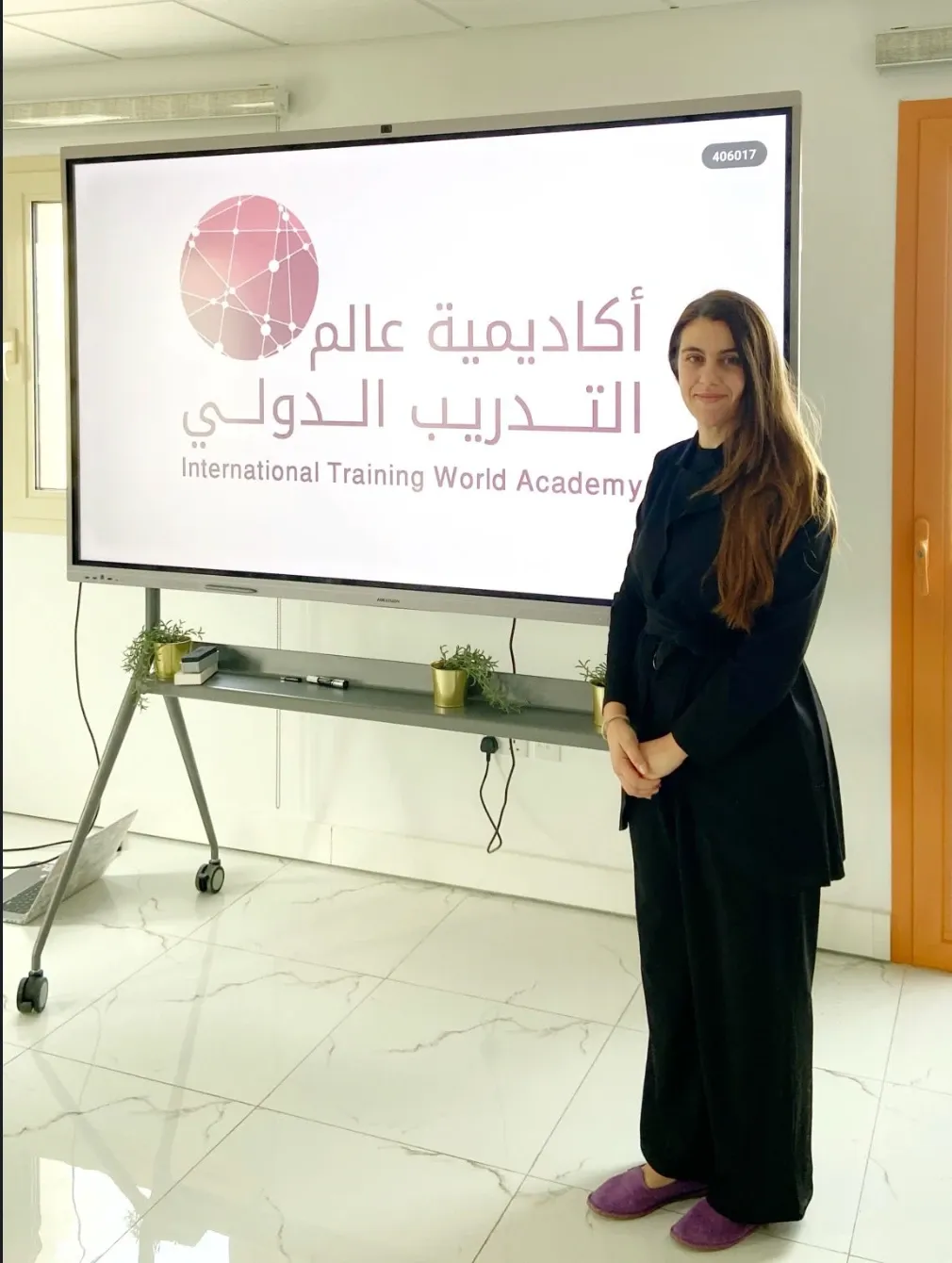
March 2025
Teaching abroad
A dream come true. In Oman, with a great team of trainers, I prepared legal professionals for the TOLES exam and advanced legal skills.
-
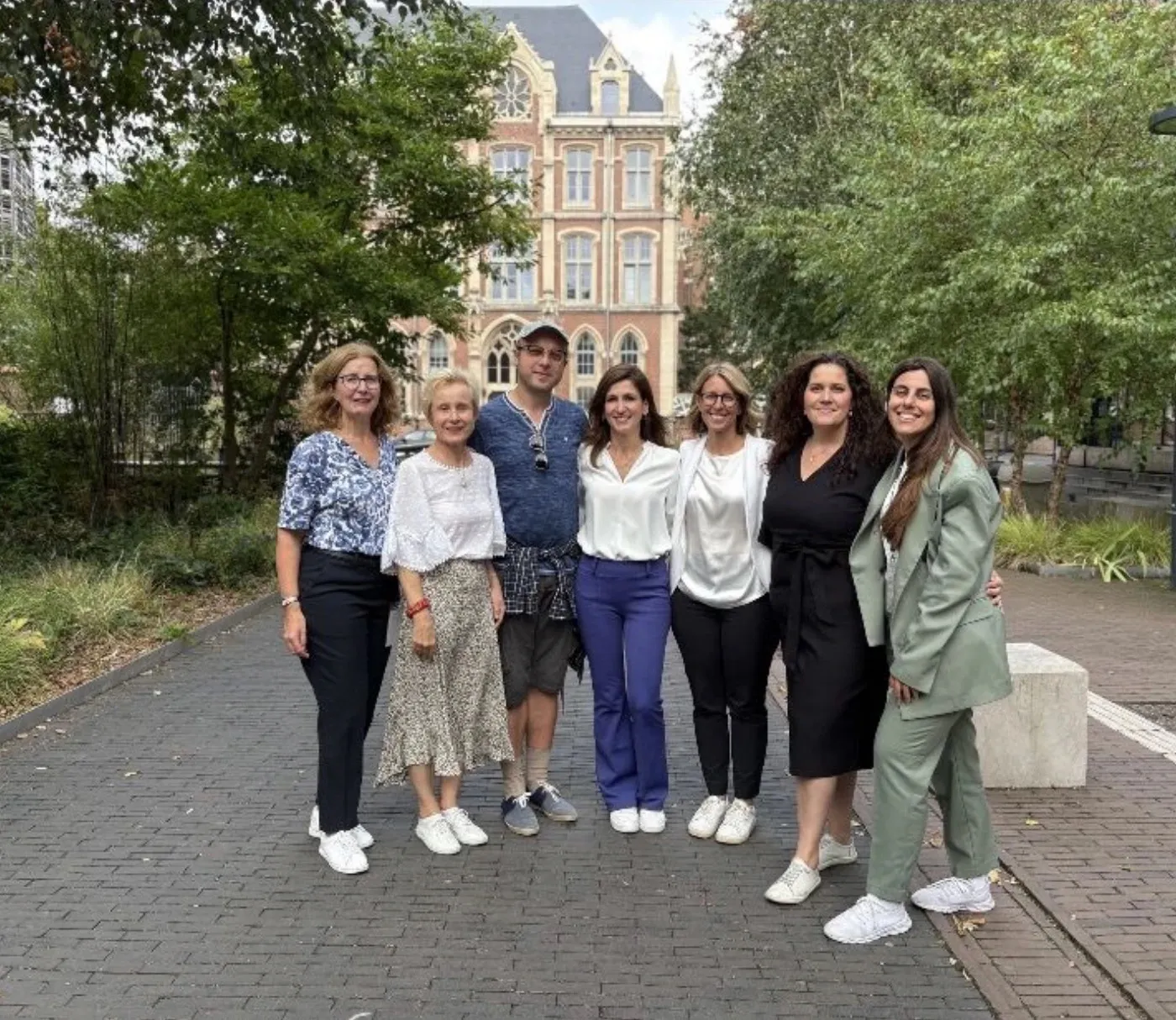
September 2025
Vice President of EULETA
At my first conference of EULETA (the European Legal English Teachers’ Association), in 2022, I was afraid I’d feel behind. Instead, I was welcomed. Three years later, they elected me Vice President.
I built my legal English step by step.You can build yours too.Start from where you are today.
See my courses →Starting with the basics
My general English was good. My mum is Canadian, so I grew up speaking it at home. I know what you’re thinking: that’s not your case. But by the time I finished university, mine wasn’t as good as before. I wasn’t spending as much time at home anymore, and a language only stays sharp if you keep using it. So I made the effort. I built more chances to speak English into my week, and I went back to my old grammar books to improve what I already had.
Legal English was different. That, I had to build completely from scratch. Nobody speaks legal English at home.
I started with ILEC, the only legal English exam that existed at the time. You think I studied for that alone, with a book and nothing else? Of course not. I had a teacher in Genova who also taught legal English at university, guiding me through it. Without her, it would have taken me forever, and I’d have had nobody to ask when something didn’t make sense. A scholarship covered the whole course. I sat the exam in Milan and passed. More importantly, I came out of it with a base I could use at work.
ILEC didn’t make me an expert in any single area of law. That was never the point. It gave me an overview of the vocabulary across different areas, enough to get started, plus practical basics like writing emails and memos. That’s exactly the kind of foundation I give my students in my TOLES 1:1 classes: not everything, just enough to begin.
Putting it to work
That basic foundation was still all I had when I was offered a traineeship at a solicitors’ firm in London. Did I arrive with everything I needed? Of course not. But it was enough to function, to move through the work from day one, even while I still had a lot to learn.
From there, I improved everything else, day by day. I read client documents and contracts. I listened in client meetings and took notes. I wrote blog posts for the firm’s website. I spoke with other lawyers, in the office and in meetings. By the end of the traineeship, legal English felt like my own language. I wasn’t pretending to be an international lawyer anymore. I was one.
And if you’re thinking you can’t get there because you’re not working abroad, here is the good news: you don’t need to move to another country. You need real practice, on a regular basis. That’s exactly why I created Legal English News Bites: real legal English practice, every week.
Back in Italy
I came home, finished my traineeship, and passed the Bar exam. But by then, I’d already started teaching English as a second job. I was working as a consultant for my local court, and lawyers and judges I met there told me they wanted to improve their legal English. In 2016, I got my first two groups: one of lawyers, one of judges. That’s when I discovered TOLES, the Test of Legal English Skills. I taught it, and some of my students passed with high scores. They were happy, and so was I.
I realised I’d been teaching without a method, mostly copying what I’d watched my mum do for years. So I decided to build that side properly too, and got TEFL qualified in London.
For the next seven years, SpeechLex stayed my second job while I kept building: a postgraduate specialisation in legal translation, holidays spent at translator conferences at the EU Commission, and eventually, the courage to attend a conference of EULETA, the European Legal English Teachers’ Association. That’s where I felt I had finally found people like me. Former lawyers, linguists, native and non-native English speakers, all doing the same work in different ways, all genuinely good at it. Watching what their students were achieving gave me the courage to take the final step.
Lawyer-linguist
I left my part-time job and registered as a lawyer, to build a career as a lawyer-linguist. I helped clients who needed both law and English at once: a travel agency in Tanzania that needed a local law firm to understand exactly what they needed for their bylaws, an illustrator getting her work protected abroad.
In 2025, I got the opportunity to teach legal English in Oman for a full year, in a programme run by the country’s Ministry of Labour and Ministry of Justice. Teaching legal English was clearly what I actually wanted to do. By the end of 2025, I closed my legal practice and moved into legal English full time, teaching and translating. I never stopped translating.
Learn it. Live it. Level up.
I built SpeechLex around the same three steps that got me here. You don’t need to follow them in order: start wherever you are.