How do you start a formal email when you don’t know the gender of the person you are writing to? If you can, ask. If you can’t, my short answer is this: use the person’s role (“Dear Counsel”), the full name (“Dear Alex Morgan”) or the gender-neutral title “Mx” (“Dear Mx Morgan”). For a group, “Dear Colleagues” or “To whom it may concern” works better than “Ladies and Gentlemen”. Below, I explain each option and why it matters in legal writing.
Last week, I published a blog post discussing how to greet individuals in formal business emails. The article addressed common challenges my students face when composing such emails. A significant hurdle they encounter is writing a first-contact email to a group of unknown recipients. My suggestion was - among others - to use ‘Dear Ladies/Madams’ when addressing a group of all females and ‘Dear Sirs/Gentlemen’ when addressing a group of all males.
Following the publication, my colleague and friend Tetyana Skrypkina raised a thoughtful point about whether using these expressions might not align with the goal of employing gender-neutral language. I then researched to develop a collection of language tools for crafting gender-inclusive email greetings, and this article is the outcome of my research.
Gender inclusivity in legal writing
As we are all “equal before and under the law,” it’s essential to ensure that everyone sees themselves represented. This is of primary importance for lawmakers and equally vital for all individuals engaged in the justice system, each contributing in their distinct capacities. The goal is that no one should ever feel marginalized due to the unnecessary or exclusive use of male or binary gender terminology.
In today’s society, gender identity and expression go beyond the traditional “he and she” or a rigid division between masculine and feminine. It is, therefore, crucial for lawyers to acquire the skill of achieving clarity while upholding gender inclusivity and refraining from making gender-related presumptions.
Gender-inclusive salutations in emails
Addressing a group of individuals
In such instances, it is possible to replace gendered greetings like “ladies and gentlemen” or “Dear Sirs/Madams” with more gender-inclusive alternatives that suit the context.
For example, you can opt for a universally inclusive salutation, e.g. ‘To whom it may concern’. Alternatively, you can use a greeting that aligns with a shared role or identity, e.g. ‘Dear Shareholders / Colleagues / Counsellors’.
Addressing a specific person
When composing content concerning particular individuals, the writer normally possesses knowledge of their genders, preferred pronouns, or appropriate titles.
However, in cases where such information is unavailable, employing gender inclusive salutations in emails and using techniques that deliver a neutral or inclusive greeting can significantly assist the writer. At least until we receive a clear indication about their preferred salutation from such a person.
What to do when you don’t know a person’s preferred honorific
“Honorifics” encompass titles such as Ms, Mr, Mrs, and the gender-neutral option, “Mx” (pronounced as “mix”). Additionally, we can use a role descriptor, e.g. lawyer, academic titles, e.g. Professor or military roles, e.g. Officer Kandinskij, to name a few.
The application of honorifics should follow a consistent pattern: either use them for all individuals or omit them entirely. Inconsistencies in using honorifics within the same document may inadvertently convey a sense of superiority, inferiority, or marginalization, singling out certain individuals as more deserving of a title and, hence, greater significance than others.
When a writer does not know the honorifics of a specific person, they have the following options:
- If possible, ask the person or someone who knows them. Respect a person’s honorifics and be open to the possibility that someone does not want to be addressed with an honorific.
- Use a role descriptor in place of a gendered honorific. e.g. Judge, Counsel, Secretary, etc.
- Use an academic title in place of a gendered honorific. e.g. Professor, Dean etc
- Use the person’s full name and repeat it if necessary to avoid using gendered pronouns.
- Use a defined term representing the person’s name or role within a given legal framework. e.g. Clarissa Hack ‘the Buyer’
- Keep using gender-inclusive greetings and writing techniques until you learn the person’s honorifics.
In this evolving landscape of gender diversity, adapting our language and practices to be more inclusive respects the rights and identities of all individuals and enhances the effectiveness and credibility of legal writing. As the legal community continues to embrace gender-inclusive language, we move closer to achieving a more equitable and just society for everyone.
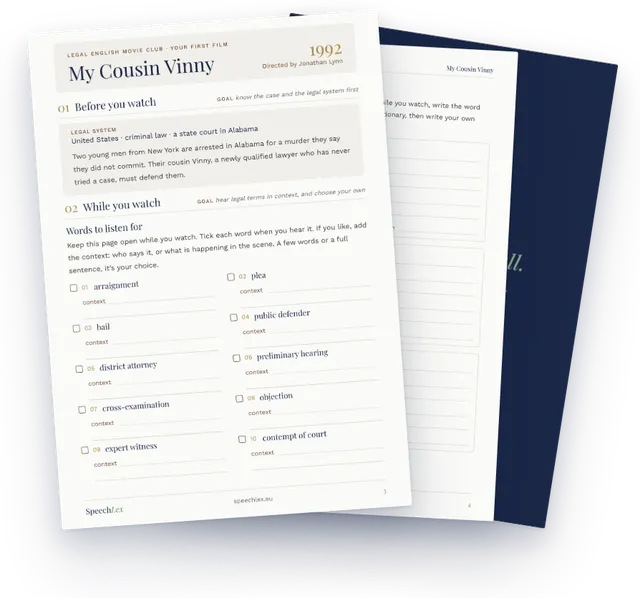
Emails are only one part of legal English. Want to practise the rest, for free? Join the Legal English Movie Club: one film about law every month, and a live conversation about it.
Sources
BCLI. (n.d.). https://www.bcli.org/wp-content/uploads/Gender-Diversity-in-Legal-Writing.pdf
Petrow, S. (2019, February 28). It’s time to add “MX.” into the daily mix of titles we use to address each other. USA Today. https://www.usatoday.com/story/opinion/2019/02/28/mx-honorific-courtesy-title-nonbinary-non-comforming-transgender-folks-identity-column/2993966002/
Philip. (2015, December 3). “MX.”? did the Times adopt a new, gender-neutral courtesy title? The New York Times. https://www.nytimes.com/2015/12/03/insider/mx-did-the-times-adopt-a-new-transgender-courtesy-title.html