Seeking and offering advice through formal emails is an essential aspect of building professional relationships and making informed decisions. As your Legal English teacher, I am here to guide you through the intricacies of requesting and providing business advice in a formal context. This article will explore how to open, ask for, and offer advice, all while maintaining a polished tone.
Opening the email: formal vs. informal expressions
1. Formal opening for requesting advice
When initiating a formal email requesting advice, it’s essential to convey professionalism and respect. Address the recipient with the appropriate title and use a polite tone.
Example:
Dear [Recipient’s Title/Name/Surname],
I trust this message finds you well. I am writing to seek your guidance on [briefly describe the issue or topic]. Your expertise and insights would be greatly appreciated.
2. Informal opening for requesting advice
In a more relaxed, informal context, you can maintain respect but employ a friendlier tone.
Example:
Hi [Recipient’s Name],
Hope you’re doing well! Can I pick your brain about [briefly describe the issue or topic]. Your input would be a blessing.
Asking for advice
When seeking advice, it’s crucial to be clear about the issue and respectful of the recipient’s time and expertise.
1. Formal request
Example:
I am facing a challenging legal issue involving [briefly describe the issue]. Given your extensive experience in this area, I would be extremely grateful for any guidance you can provide. Could we arrange a suitable time for a brief discussion or receive your written input on this matter?
2. Informal request
Example:
I’m dealing with a bit of a tricky situation related to [briefly describe the issue]. Since you’re a pro at this, I thought I’d reach out for some advice. Could you spare a few minutes to talk about it?
Giving advice
1. Formal advice
Example:
Thank you for considering my input. Regarding the legal matter you mentioned, I would recommend [provide concise advice]. If you need further elaboration or have specific questions, please do not hesitate to reach out and we can schedule a meeting.
2. Informal advice
Example:
Sure thing! In your situation, I’d suggest [offer advice in a friendly manner]. If you want more details or have any follow-up questions, just hit me up.
Grammar for providing advice and suggestions
1. ‘recommend’, ‘advise’ and ‘suggest’
The verb ‘advise’ is the most formal among the three and is typically employed when a person in a position of authority or expertise strongly proposes something. It may be provided by individuals like government officials, supervisors at work, doctors, or a lawyer.
The verb ‘recommend’ is less formal compared to ‘advise’ and has a more personal touch. It is commonly used when someone offers a suggestion based on their personal experiences. Friends, family members, and coworkers, for instance, frequently recommend things to one another.
‘Suggest’ is the least formal of the three verbs. This verb is utilized in numerous situations to present an idea, express an opinion, or propose a potential course of action for someone to contemplate.
2. ‘recommend’, ‘advise’ and ‘suggest’ + -ing
The verbs recommend, advise and suggest have a similar meaning and take the pattern verb + -ing
- The legal counsel strongly recommends seeking mediation to resolve the dispute, fostering a more amicable resolution.
- The solicitor advised reviewing the contractual terms carefully before signing, ensuring a comprehensive understanding of the obligations.
- The judge suggested considering alternative dispute resolution methods, such as arbitration, to expedite the litigation process.
3. When the person receiving the recommendation is mentioned
Subject + recommend/suggest/advise + to-infinitive
When the person who is receiving the recommendation is mentioned, the grammar pattern we have studied above changes and typically follows this structure:
- Subject (the person giving the recommendation)
- Verb (e.g., “recommend,” “suggest”, “advise”)
- Object (the person receiving the recommendation)
- To-infinitive verb phrase (e.g., “to seek mediation,” “to review the contractual terms,” “to consider alternative dispute resolution methods”)
Example:
“The legal counsel (1) strongly recommends (2) the client (3) to seek mediation (4) in order to resolve the dispute.”
“The lawyer advised the client to rescind the contract”
Subject + recommend/suggest/advise that
When the person who is receiving the recommendation is mentioned, and “that” is added before the verb, the grammar pattern typically follows this structure:
- Subject (the person giving the recommendation)
- Verb (“recommend that,” “suggest that”)
- Object (the person receiving the recommendation)
- Base form of the verb or clause that provides the specific recommendation or advice.
Example:
“The legal counsel (1) recommends that (2) the client (3) seek mediation (4) to resolve the dispute.”
In this pattern, “the legal counsel” is the subject (1), “recommends that” is the verb (2), “the client” is the object (3), and “seek mediation” is the base form of the verb that provides the specific recommendation (4).
“The Prosecutor advised that the client be kept in prison.”
Closing the email
Conclude your email with courtesy and professionalism, leaving the door open for further communication.
1. Formal closing
I appreciate your time and assistance. Looking forward to your response. Thank you once again for your guidance.
Yours sincerely,
[Your Name]
[Your Contact Information]
2. Informal closing
Thanks a million for helping me out. Catch you soon.
Best regards,
[Your Name]
Additional tips for successful business advice emails
- Be concise and to the point when describing the issue or offering advice.
- Respect the recipient’s expertise and time by framing your request or advice clearly.
- Express gratitude for the assistance received or provided.
- Use a professional email signature with your contact details.
In summary, the art of requesting and providing advice in formal business emails is a vital skill in the legal and business English world. It can foster valuable professional relationships and ensure that decisions are well-informed. By mastering the nuances of opening an email, requesting advice, providing advice, and closing the email, you will be better equipped to navigate the complex terrain of business communication.
Wishing you success in your legal and business English journey!
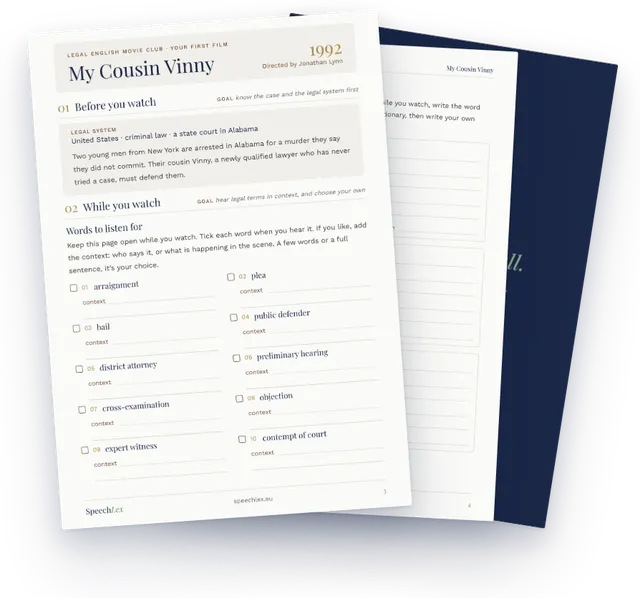
Emails are only one part of legal English. Want to practise the rest, for free? Join the Legal English Movie Club: one film about law every month, and a live conversation about it.